
Robotic-Assisted Hip & Knee Replacement · Hawaii
Get back to the life you love — with robotic hip & knee replacement in Hawaii.
Dr. Paul Norio Morton — board-certified, fellowship-trained — pairs ROSA® robotic precision with muscle-sparing surgery and rapid-recovery protocols. Same-day discharge for eligible patients. The robot assists; Dr. Morton controls every step.
Scheduling online takes about a minute · Oahu & Big Island · HMSA, Medicare, TRICARE & more accepted — call to verify coverage
"Dr. Morton did my left hip replacement… a great experience… I can move on without any more hip pain."
— Joanne S., hip replacement patient Excerpt from a patient review. Individual results vary.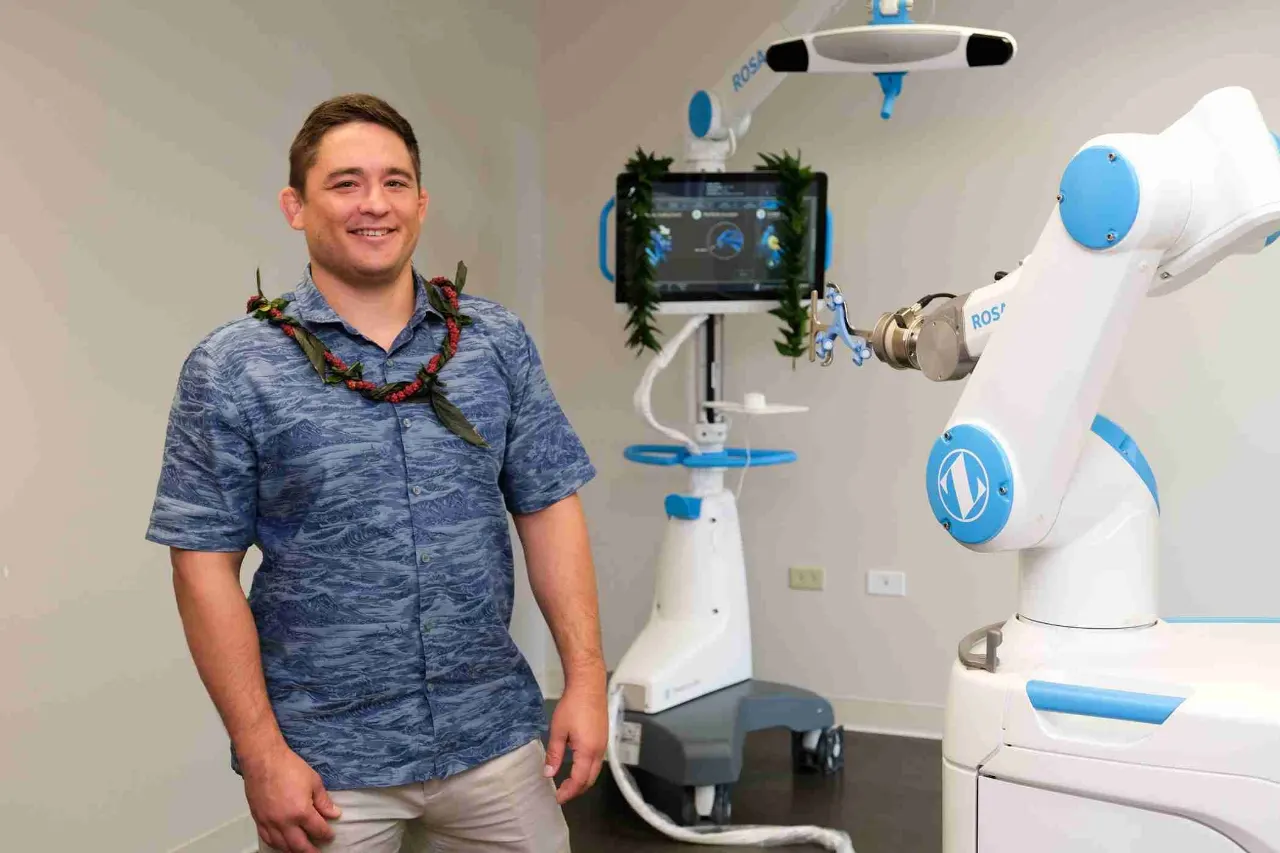
Simple to Start
From joint pain to a plan — in three steps
Schedule your appointment
About a minute online, or call us. Our team usually replies within one business day.
Meet Dr. Morton
An exam, a review of your X-rays, and an honest conversation about all of your options — surgical and non-surgical.
Get your personalized plan
Robotic-assisted surgery if it's right for you — or therapy, bracing, and injections if it's not. Your goals set the plan.
Start Here
Is a hip or knee replacement right for me?
Joint replacement is usually considered when arthritis pain limits the things you need and love to do, and non-surgical care hasn't given you enough relief. These are common signs it may be time for an evaluation.
- Pain that limits walking, stairs, or sleep
- Stiffness or a joint that "gives out"
- Less relief from medications, injections, or therapy
- X-rays showing advanced arthritis or bone-on-bone changes
- Giving up activities you used to enjoy
Not everyone with joint pain needs surgery. The first step is a clear, honest evaluation — and we offer non-surgical options too.
Not Sure You're Ready?
Take a quick self-check
Not ready to book yet? Answer a few quick questions to see whether joint replacement might be right for you. This is educational only — not medical advice — and your answers stay on your device. When you're ready, schedule an appointment.
The Technology
What ROSA® does
ROSA® (Robotic Surgical Assistant) is a tool that supports your surgeon with planning and real-time data during your procedure.

- Builds a 3D surgical plan based on your anatomy
- Gives Dr. Morton real-time alignment & balance data
- Helps execute the plan with a high degree of precision
- Pairs with muscle-sparing approaches & rapid recovery
Dr. Morton controls every step of your surgery. Research suggests robotic assistance may improve the accuracy of implant alignment and positioning compared with conventional instruments; individual results vary.

Why It Matters
The technology is only as good as the surgeon using it
A robot doesn't make a surgeon. Experience, training, and judgment do. With joint replacement, surgeon experience is one of the most important factors in your care.
Dr. Paul Norio Morton is Hawaii's first orthopedic surgeon fellowship-trained in robotic joint replacement. A Big Island local raised in Kea'au, he trained at the John A. Burns School of Medicine, completed an adult-reconstruction fellowship at the University of Chicago, and an AO Trauma fellowship in Berlin. He performed the first robotic-assisted joint replacement on the Big Island.
- Board-certified orthopedic surgeon (ABOS)
- Fellowship-trained in adult hip & knee reconstruction
- Member · AO Trauma and the Philippine Medical Association of Hawaii
- Medical school at the John A. Burns School of Medicine; residency at St. Luke's University Health Network; fellowship at the University of Chicago
Memberships




Education, Training & Certification




Wondering if you're a candidate for robotic joint replacement?
Robotic Knee Replacement
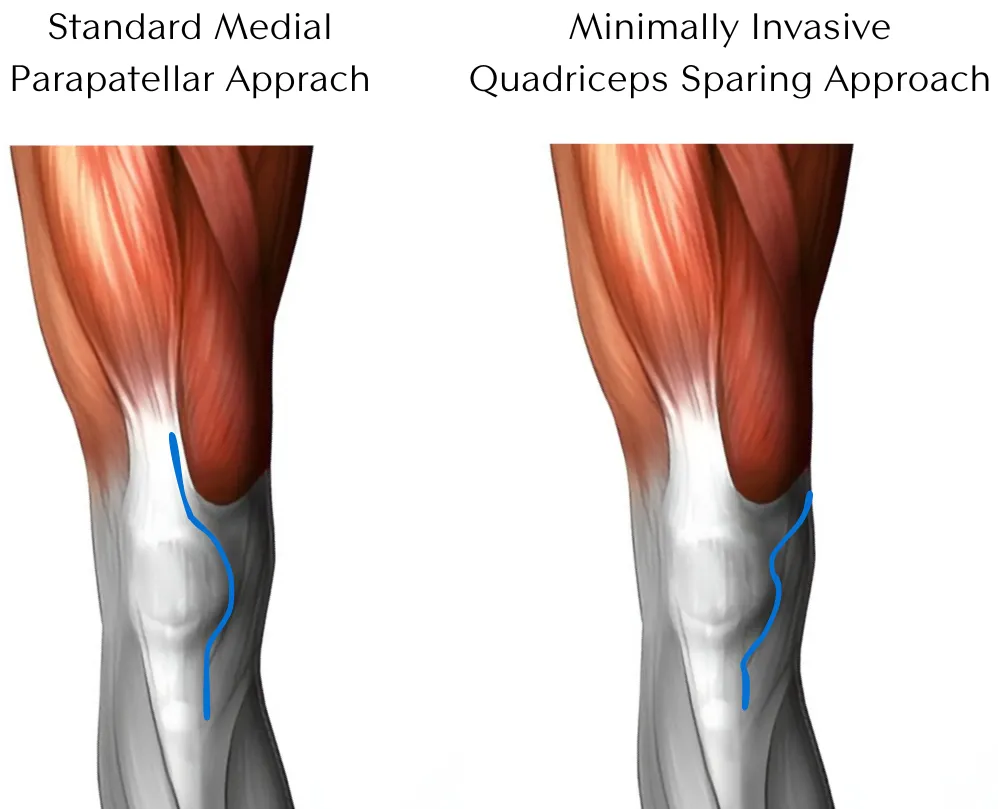
Muscle-sparing knee replacement with the subvastus approach
For knee replacement, Dr. Morton favors the subvastus approach, which works beneath the quadriceps muscle rather than cutting through the quad tendon. Preserving the extensor mechanism may support earlier leg control and mobility in selected patients.
- Quadriceps-sparing — the quad tendon is left intact
- Tourniquet-free technique for eligible patients — designed to reduce thigh pain, bruising, and swelling
- Partial & total knee options, planned with ROSA®
- Designed to support earlier mobility for eligible patients
- Recovery varies; the subvastus approach is not right for everyone

Robotic Anterior Hip Replacement
The anterior approach with a discreet bikini incision
For total hip replacement, Dr. Morton uses the direct anterior approach with a "bikini" incision placed along the natural groin crease. The anterior approach works between muscles rather than detaching them, and the bikini incision is designed to heal as a discreet scar.
- Muscle-sparing internervous approach
- Discreet, low-profile incision along the skin crease
- Planned with ROSA® for implant positioning
- May support early recovery in selected patients; not for everyone
Rapid Recovery
Same-day discharge: who qualifies, and who may not
With muscle-sparing techniques and modern protocols, many patients can go home the same day. It's a wonderful option — but it isn't right for everyone, and safety comes first.
May be a good candidate
- Generally healthy with well-managed conditions
- Motivated and able to participate in early therapy
- Has support at home for the first days
- Lives in a setting suited to early recovery
May need a hospital stay
- Certain heart, lung, or other medical conditions
- Limited support at home
- Higher-complexity or revision surgery
- Anything that makes overnight monitoring safer
Dr. Morton's team will help you decide what's safe for you. Same-day discharge is offered only for carefully selected patients.
What to Expect
A general recovery timeline
Every patient is different and recovery varies. This is a general guide, not a promise — your plan will be personalized.
Up and walking with support, often within hours. Eligible patients may go home the same day.
Walking at home with an aid, beginning gentle therapy, focusing on comfort and motion.
Many patients transition off walking aids during this time and resume light daily activities as therapy progresses.
Continued strengthening and return to many activities. Full recovery can continue over the year.
Timelines vary by patient, procedure, and health. Your care team — including our physical therapists — will guide each step.
Narcotic-Sparing Recovery"With our narcotic-sparing protocols, most of my patients recover comfortably with little or no narcotic pain medication."
— Dr. Paul Norio Morton
What the Research Suggests
Grounded in evidence — described honestly
Here's a measured summary of what published research suggests. These are general findings, not promises about your individual result.
More accurate implant positioning
In a meta-analysis of randomized trials, robotic-assisted knee replacement achieved more accurate implant alignment than conventional instruments — though clinical scores were similar between groups. Results vary.
Same-day discharge for selected patients
For carefully selected, healthy patients, outpatient (same-day) joint replacement can be appropriate — but patient selection is critical and not everyone qualifies. Eligibility depends on your health and home support.
Durable joint replacements
Pooled national-registry data estimate that roughly 82% of total knee replacements are still functioning at 25 years. Longevity varies by patient, activity, weight, and other factors.
Muscle-sparing approaches
Randomized-trial meta-analyses associate the direct anterior hip approach with less early pain and earlier discontinuation of walking aids, and the subvastus knee approach with faster early recovery — in selected patients. They are not appropriate for everyone.
Yang et al., Orthop Surg, 2020 · Wu et al., Int J Surg, 2018
Citations link to the source studies on the publisher's site. Findings describe study populations and are not a guarantee of results for any individual.
Get a clear, honest answer about your hip or knee.
Not Ready for Surgery?
Non-surgical options come first
Surgery is rarely the first step. For many patients, non-surgical care relieves pain and keeps you active — and may delay or avoid joint replacement. We'll always start with what's appropriate for you.
Physical therapy
Guided exercise and strengthening is a proven, first-line treatment for hip and knee arthritis. Our in-house team makes it convenient (see below).
Bracing & activity changes
Custom bracing and simple activity adjustments can offload painful areas and improve stability while you stay active.
Image-guided injections
Cortisone/steroid and hyaluronic acid (gel) injections can provide targeted, temporary relief for selected patients.
Orthobiologics: PRP & BMAC
Some patients see symptom relief from platelet-rich plasma (PRP) or bone marrow aspirate concentrate (BMAC). The evidence is still evolving, these are generally not covered by insurance, and they are not a guaranteed cure or a substitute for joint replacement when it's indicated. Dr. Morton will tell you honestly whether they're a reasonable option for you.
In-House Recovery
PB&J Physical Therapy — recovery under one roof
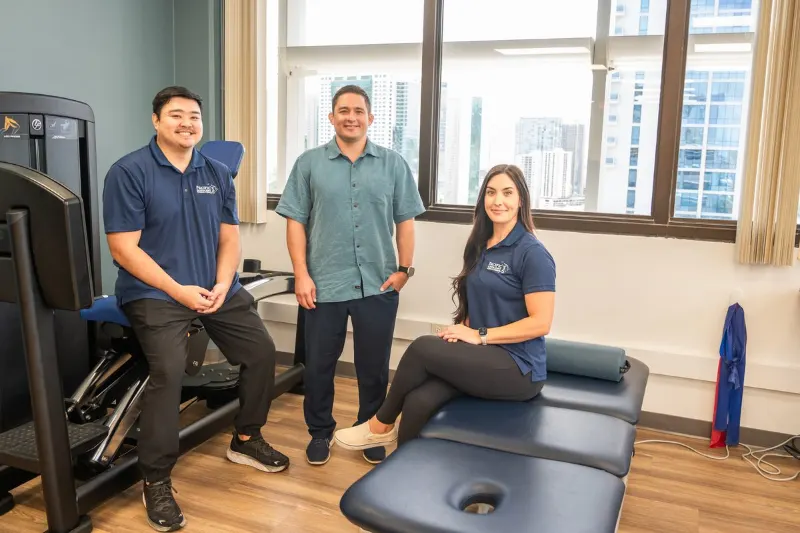
Great surgery is only half the story; recovery is the other half. Our own PB&J Physical Therapy team works hand-in-hand with Dr. Morton, so your surgeon and your therapists are on the same page from day one.
- Pre-surgery "prehab" to prepare your joint and muscles
- Rapid-recovery rehab coordinated with your surgical plan
- Non-surgical therapy for those not ready for, or avoiding, surgery
- One connected team — surgeon and therapists, together
Patient Stories & Education
Meet "The Robot Doc" — and hear from patients
Watch how robotic precision, muscle-sparing surgery, and rapid recovery help Hawaii patients get back to what they love.
Individual experiences vary; your results may differ.
Reviews & Recognition
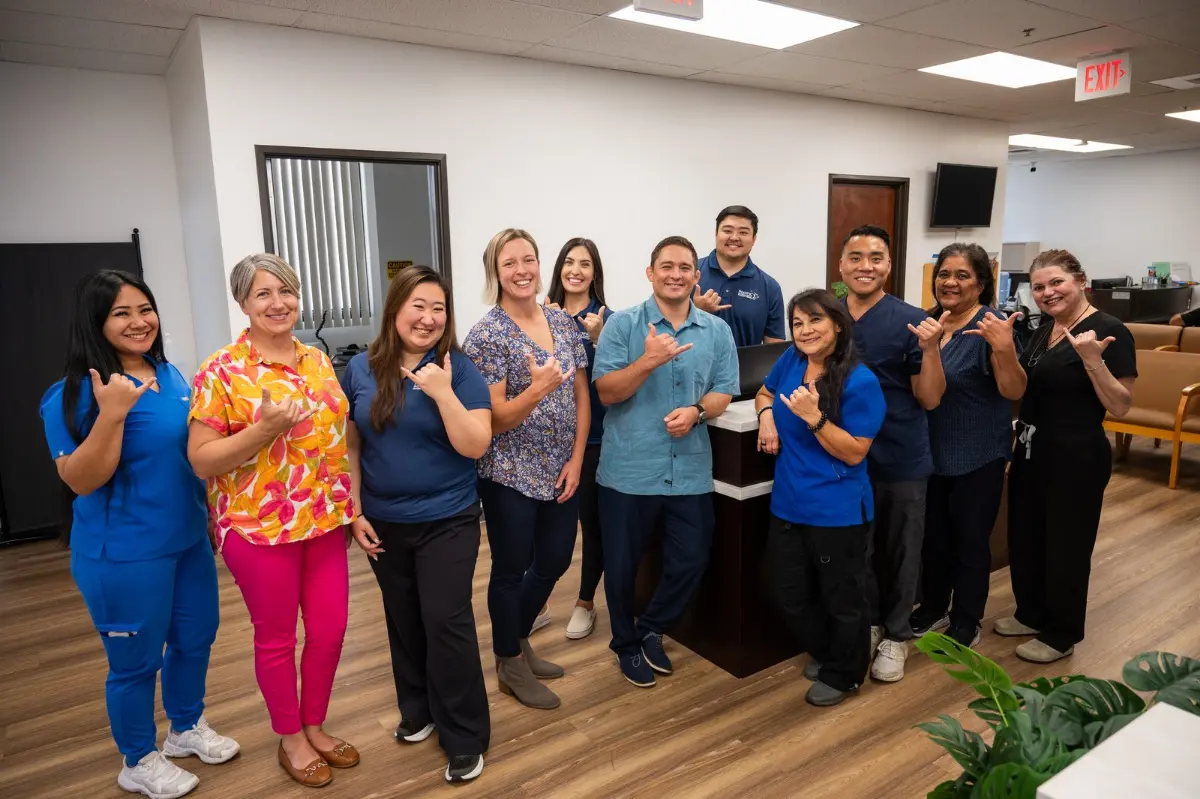
Trusted by patients across Hawaii
"I lived with a hip injury for 34 years. Two surgeons had turned me down over the years, so I gave up — until I was referred to Dr. Morton. I could tell he already had a plan. After surgery, taking those first walks with physical therapy, I was amazed how different life is now that my walking has improved. I thank God he led me to Dr. Morton — I can't wait to spend more time playing outside with my two boys."
— Johan C., hip replacement patient
"The staff for Dr. Morton is the BEST TEAM I've seen by far — no comparison to others, including the mainland. Dr. Morton is very patient, has great bedside manner, and explains things in words I understood."
— Cindy W.
"Dr. Morton's approach is much appreciated — he's not in a rush to get you under the knife. He went over all available options and considered how each would affect my professional life and leisure activities. Super knowledgeable and easy to talk to."
— Andrea G.
"Dr. Morton did my left hip replacement with the anterior approach — a great experience. The whole staff got me fixed up, my hip is healed, and I can move on without any more hip pain. Mahalo to the whole team!"
— Joanne S.





Review excerpts reflect individual patient experiences and may be lightly condensed for length. Results vary.
As Featured On







Oahu & Big Island
Locations across Hawaii
Serving Oahu and the Big Island — and welcoming neighbor-island and out-of-state patients.
Honolulu (Oahu)
Ala Moana Medical Building
1441 Kapi'olani Blvd., Suite 2020
Honolulu, HI 96814
Surgical Hospital Affiliations



Office hours: Monday–Friday, 8 a.m.–4:30 p.m.; Saturday, 8 a.m.–2 p.m. (HST). Please call to confirm appointment times at the Hilo and Kona offices.
Ask Dr. Morton
Frequently asked questions
Does the robot perform my surgery?
No. Dr. Morton performs and controls every step. ROSA® is a surgical assistant that helps with 3D planning and real-time data — it does not operate on its own.
Will I really be able to go home the same day?
Many healthy patients are good candidates, but not everyone qualifies. It depends on your health, your procedure, and your support at home. Your team will help you decide what's safe.
How long does a hip or knee replacement last?
Modern implants are designed for long-term durability and many last well over a decade. Results vary by patient, activity, weight, bone quality, and other factors.
What is the bikini incision?
A short incision along the natural bikini-line crease, used with the muscle-sparing anterior approach. It's designed to spare muscle and heal discreetly. It isn't right for every patient.
Why the subvastus approach for knees?
It works beneath the quadriceps instead of cutting the quad tendon, which may support earlier leg control and mobility in selected patients. Recovery varies.
Do PRP or BMAC injections cure arthritis?
No. Some patients experience symptom relief, but the evidence is still evolving, these are usually not covered by insurance, and they are not a cure or a substitute for joint replacement when it's indicated.
Do you see neighbor-island and out-of-state patients?
Yes — from Oahu, Hilo, Kona, the neighbor islands, and the mainland. We can start with a virtual conversation and coordinate your visit.
Do you take my insurance?
We accept HMSA, UHA, HMAA, Medicare and Medicare Advantage plans, TRICARE, VA Community Care, and Kaiser Permanente Added Choice. Benefits and referral requirements vary by plan, so please call our office at (808) 439-6201 to verify your coverage. Self-pay options are also available.
Take the First Step
Find out if you're a candidate
Get a clear, honest evaluation from a board-certified, fellowship-trained joint replacement surgeon. We'll review your options — surgical and non-surgical — and help you choose what's right for you.
- 📞 Call (808) 439-6201 · Mon–Fri 8 a.m.–4:30 p.m., Sat 8 a.m.–2 p.m. (HST)
- 🩺 We accept HMSA, UHA, HMAA, Medicare, TRICARE, VA Community Care, Kaiser Added Choice & more — call to verify your coverage
- ✉️ Email contact@pacificboneandjoint.com
Prefer to talk? Give us a call or send an email — otherwise the secure Klara form (preferred) is the fastest way to be seen.
Schedule your evaluation on Klara
Klara is our secure, HIPAA-compliant messaging tool. Tap below to message our team directly — no phone tag.
- Tap Start on Klara
- Tell us about your hip or knee
- Our team replies, usually within one business day
For medical emergencies, call 911. This page is informational and not a substitute for medical advice.